CCTV installation for retail malls: what changes at that scale
A mall isn't a big shop. The camera count goes up, but the real differences are structural — who owns which cameras, how long footage needs to be kept, and who's actually watching the screens. Here's what changes once you move from a single storefront to a multi-tenant property.
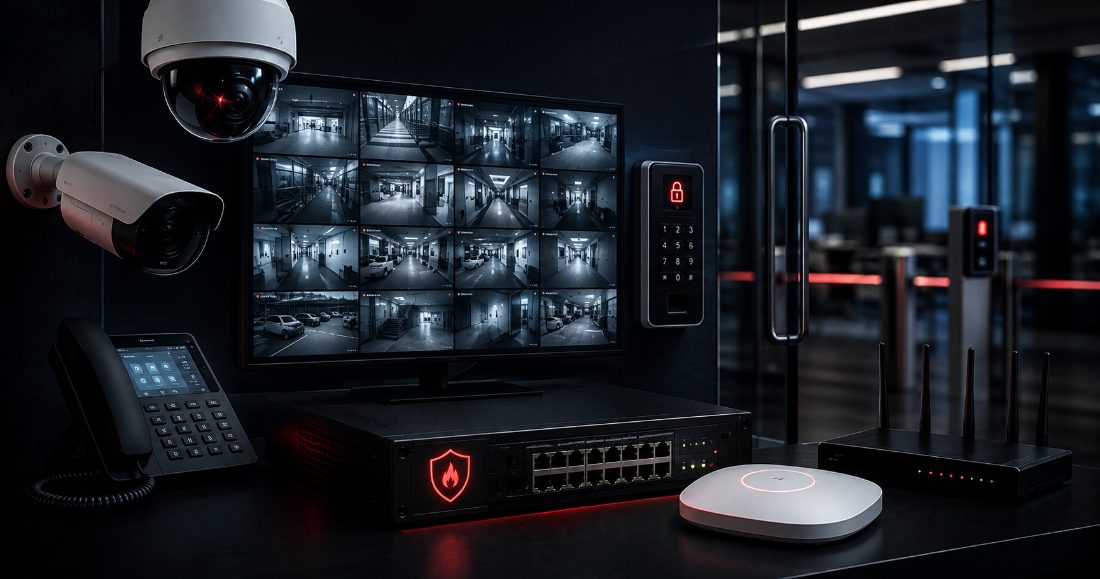
A mall is two CCTV systems, not one
In a single shop, one owner, one system, one set of cameras. In a mall, mall management owns and monitors the common areas — corridors, atriums, escalators, parking, fire exits — while each tenant typically runs (and is responsible for) CCTV inside their own store. Getting this split defined clearly at the design stage, including who has access to which footage and how a dispute at a store entrance gets resolved between two systems, avoids a lot of finger-pointing later.
Parking needs ANPR, not just cameras pointed at cars
A shop's frontage camera just needs to see who walked in. A mall's parking structure needs to log vehicles in and out — automatic number plate recognition tied to entry/exit barriers, correlated with ticketing or app-based parking systems. This matters for two very practical reasons: resolving "my car was damaged/missing" disputes with an actual vehicle log, and giving facility management real occupancy data instead of a guess.
Coverage should follow footfall, not floor plan
Most real incidents in a mall — theft, altercations, minor accidents, lost children — concentrate at a small number of high-traffic pinch points: atriums, escalator landings, food court seating, washroom corridors, and entry/exit gates. These need denser coverage and higher resolution than a quiet back service corridor. Designing camera density around where people actually cluster, rather than spreading cameras evenly across square footage, is what makes a mall's coverage useful instead of just extensive.
Retention needs to be measured in months, not weeks
A small shop can usually work with two to four weeks of recording. A mall deals with insurance claims, liability disputes and law-enforcement requests that can surface well after the fact — 60 to 90 days of retention is a common baseline, sometimes longer for parking and entry points specifically. That's a storage architecture decision, not just a bigger hard drive: it usually means a proper NVR/VMS setup sized for the channel count and retention window from day one, not an add-on bolted on after storage runs out.
You need a command room, not a back-office monitor
A shop owner checks a phone app. A mall of any real size runs a dedicated security/command room with a live video wall, staffed shifts, and integration with fire safety systems and access control at anchor stores and service entries. The VMS platform choice matters here in a way it doesn't for a single site — it needs to handle the camera count, support role-based access for different teams (security, facility management, individual tenants), and integrate with whatever fire and access-control systems the building already runs.
Cabling has to go in ahead of the fit-out — and stay ahead of it
Common-area cabling needs to be planned and pulled before false ceilings and finishes go in, the same as any new-build. What's different for a mall is that this now has to coordinate with dozens of individual tenant fit-out schedules running in parallel, each on its own timeline. Common-area installation is usually phased — core infrastructure and backbone cabling first, then camera positions finalized as store frontages and shared-area finishes lock in, rather than trying to do it all in one pass.
Where this fits into a mall-scale rollout
We run this the same way we run any large-scale deployment — a free site survey, a BOQ that separates common-area scope from tenant-level guidance, STQC-certified hardware, GST billing and an AMC that covers the command room, cameras and the network backbone tying it all together. The difference from a single shop isn't the process; it's designing for who owns what, how long footage needs to live, and who's actually watching it.
If you're scoping CCTV for a mall, commercial complex or multi-tenant property and want the common-area vs tenant-area split worked out properly from the start, that's a quick conversation.